 Keeptly
Guide · Warranties
Is an extended warranty worth it? Questions to ask first
At the checkout, an extended warranty can sound like cheap peace of mind. Sometimes it is. Often it covers the same months the manufacturer already does. A few questions make the difference clear.
What an extended warranty really is
What stores call an extended warranty is usually a service contract. The FTC notes that these contracts cost extra, are sold separately, and may duplicate coverage that your product's warranty already gives you. The company behind the contract is not always the manufacturer. It may be a business you have never heard of, and the contract is only as good as that company.
Start with the warranty you already have
Before you decide, look at the warranty that comes with the product: how long it lasts and what it covers. The FTC puts it plainly: a service contract is not a good value if it does not offer more coverage than the warranty that came with the product. Product reviews can also tell you whether the item often needs costly repairs.
Questions to ask before you buy
- Cost: the price up front, plus any hidden costs such as deductibles, a fee for each repair, shipping to a repair center or a transfer fee. Is there a limit on how much it will pay?
- Length: divide the price by the years of coverage to get a price per year.
- Coverage: does it cover accidental damage? Can a claim be refused because of missed maintenance? The FTC's advice: if it is not listed in the contract, assume it is not covered.
- Claims: how do you file one, who does the repair, and do you have to bring the item back to the store?
- Who backs it: how long the company has been in business, and what reviews and complaints say about it.
A quick way to compare
Example: a laptop comes with a one-year warranty, and the store offers a three-year plan for $180. The first year overlaps with the warranty you already have, so you are really paying $180 for two extra years, or $90 a year. Compare that with what a typical repair would cost and how likely one is.
The FTC also points to another route: put the money aside in a savings account for future repairs. If the product never breaks, the money stays yours.
Be careful with offers that arrive later
Offers can come by phone or mail years after a purchase. They often come from marketers with no link to the store that sold you the product, and some use high-pressure tactics. The FTC warns that the company might not even be in business when you need service. Ask for the contract in writing and read it before you agree to anything.
When it can make sense
A contract can be worth it when it clearly covers more than the standard warranty, such as accidental damage on a device you carry every day, when the price per extra year is low compared with a likely repair, and when the company behind it has a good record. If you cannot answer the questions above, wait. You can usually decide later, and the manufacturer's warranty covers you in the meantime.
How Keeptly helps
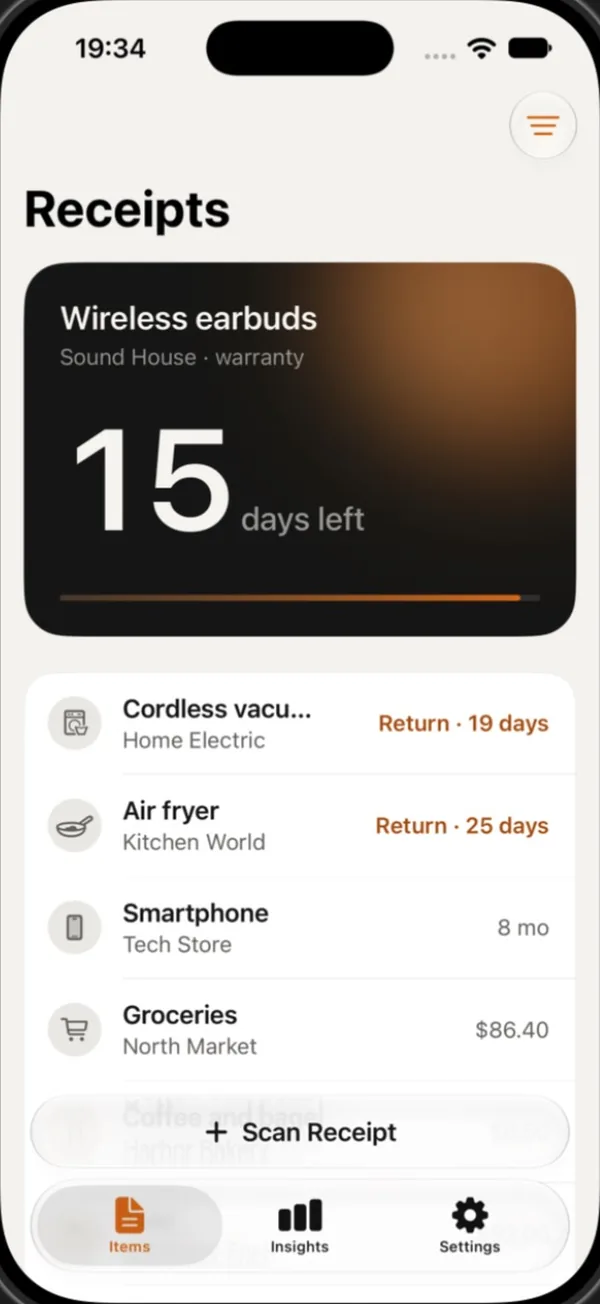
- You set the warranty length for each product, for example three or five years if you bought a longer plan.
- You can keep the plan's contract as a document next to the receipt.
- Reminders come 30, 7 and 1 day before the warranty ends, so you can test the product and claim while you are still covered.
- Insights lists the products whose warranty ends this month.
Questions
Does an extended warranty replace the manufacturer's warranty?
No. It is a separate contract, sold separately, and it may overlap with the warranty you already have.
Should I accept an extended warranty offer that comes by phone?
Be careful. The FTC warns that these offers often come from marketers with no link to the original seller and may use high-pressure tactics.
How do I know if it is worth the price?
Compare its coverage with the warranty you already have, work out the price per extra year, and check what is excluded.
Sources
- Extended Warranties and Service Contracts · U.S. Federal Trade Commission, Consumer Advice
- Warranties · U.S. Federal Trade Commission, Consumer Advice